
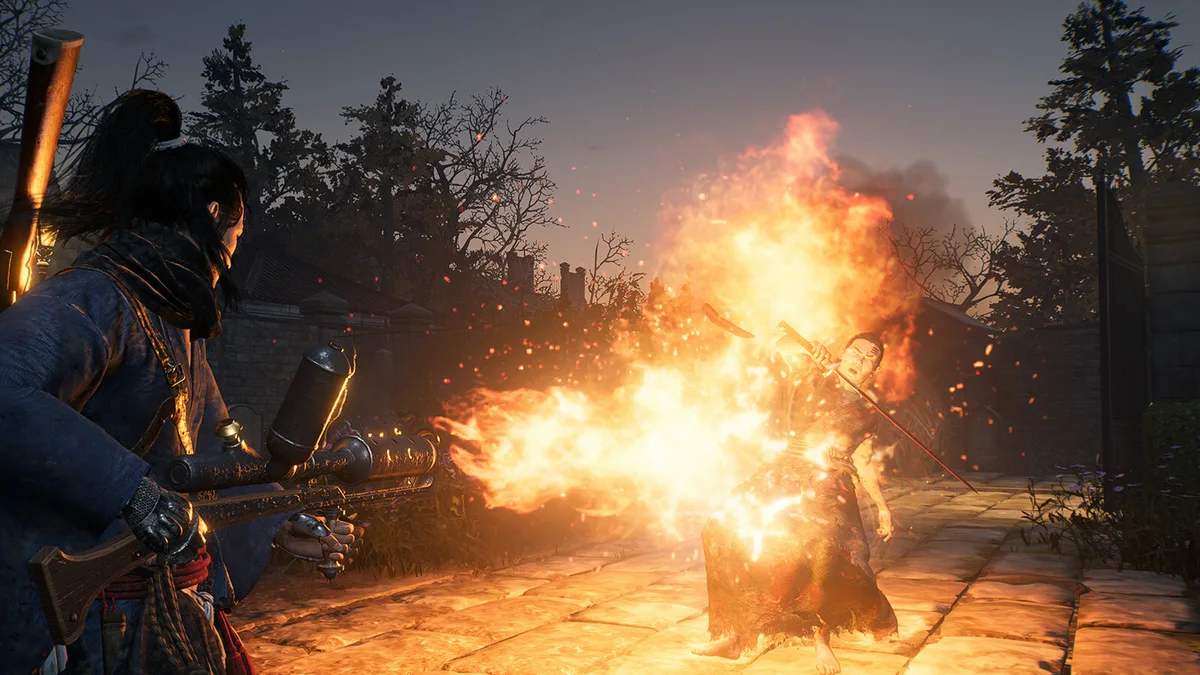
If a fight feels unfair, return to Ki, Counterspark, and style advantage before you blame the gear grind.
The core loop: pressure, answer, break, finish
Every competent fight in Rise of the Ronin follows a loop. You pressure with light and heavy strings to threaten Ki. The enemy answers with a string of their own. You answer that string with guard, dodge, or Counterspark. When their Ki collapses, you finish with critical damage and Martial Skills. Then the loop restarts at a lower maximum Ki ceiling if you have been stripping max Ki correctly.
Square-family inputs drive the basic melee offense on standard layouts, L1 guards, Circle dodges, and Triangle performs Counterspark. Hold R1 with face buttons to fire Martial Skills. The exact glyphs change on keyboard and mouse, but the grammar does not: basic attacks create turns, defensive answers steal turns, specials spend turns for burst.
Open-world trash packs try to interrupt the loop with flanks. That is why the game gives you grappling, partner AI, firearms, and wide Martial Skills. Use those tools to reimpose a duel shape on a chaotic street. If three enemies all have full Ki and free angles, you are not in a fair loop yet—reset space first.
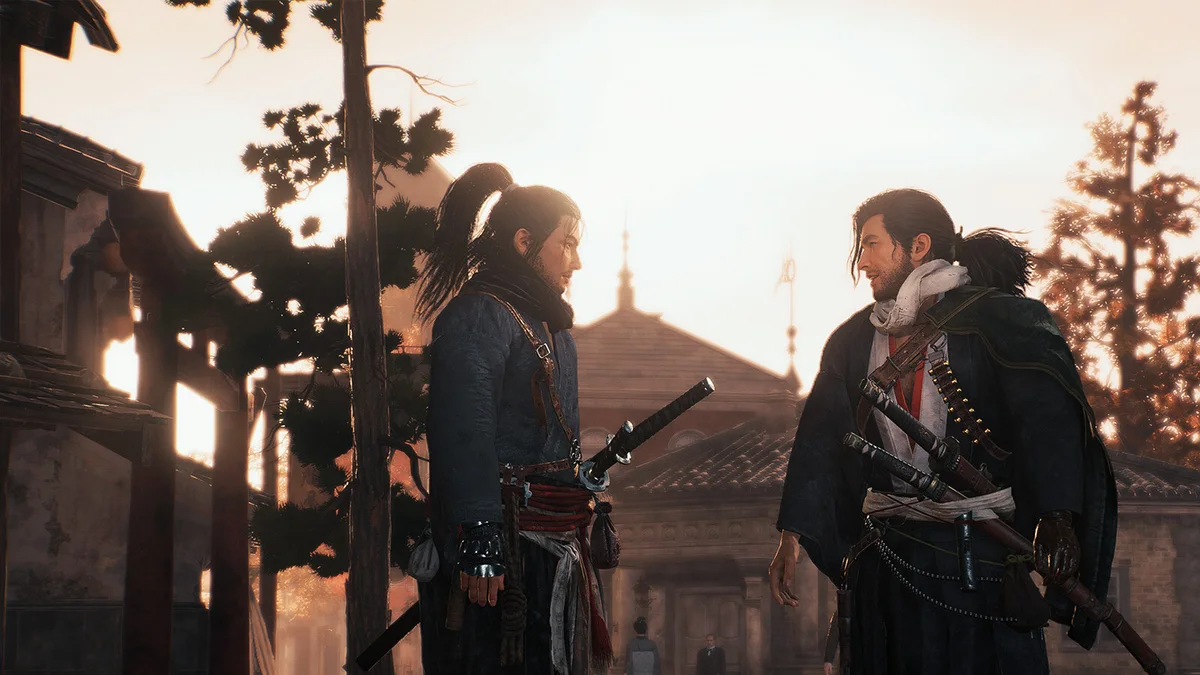
Counterspark in detail
Counterspark is a committed parry. On success it negates the attack, damages Ki, and can open a stun window. On failure it leaves you exposed. The animation is a deliberate weapon arc, not a tiny frame-perfect twitch, which is why Team Ninja can teach it to a broader audience without deleting depth.
Style advantage changes Counterspark math. The PlayStation combat diaries and in-game tips describe Ten as effective against normal/medium weapons, Chi against heavy weapons such as odachi, and Jin against lightweight weapons such as sabres—each with a matching weakness. Parrying with the right color is how you peel maximum Ki instead of only temporary Ki.
Train recognition, not panic. Watch whether the enemy weapon is medium, heavy, or light before the first parry attempt. If you are unsure, take one exchange to identify the kit, swap style, then Counterspark. A late correct parry is better than three early wrong-color heroics.

Martial Skills as budgeted power
Martial Skills are the high-damage, high-identity moves tied to your combat style and weapon. They are how builds feel different even when two players share the same blade. Because they cost resources and recovery, they are not filler light attacks—spend them when a window is real.
Good windows include: after a successful Counterspark, after a firearm stagger, when an enemy is trapped against a wall, or when partner AI has body-blocked a second attacker. Bad windows include the first frame of an enemy’s hyper-armor swing and any moment your own Ki is already near empty.
As style ranks rise, Martial Skill lists expand and change. That is why bond training is combat progression, not side content. A Master-rank style on a mid-tier weapon often outperforms a Novice-rank style on a shinier drop you do not understand.
Firearms, bows, and tools as setup—not replacement
Ranged weapons exist to create the melee turn you want. A shot that interrupts a healer, chips a full-Ki elite, or forces a flinch is perfect. A full magazine emptied while two swordsmen sprint at your back is how hybrid kits earn a bad reputation.
Bayonet is the purest hybrid: gun setup into blade finish. Bows and other firearms support pure melee mains the same way. Carry at least one ranged option even if you identify as a katana purist; Bakumatsu enemy design assumes mixed pressure.
Consumables and status tools are part of the same setup layer. Enter hard missions with a plan for paralysis, fire, or healing instead of treating the item pouch like emergency clutter. The combat system is generous if you prepare; it is blunt if you improvise every elite fight from zero.
Allies and co-op change the correct greed level
When an AI or human ally shares the arena, your job shifts from “never get hit” to “create and convert openings.” Let the ally hold attention for one second longer so your Counterspark or Martial Skill lands clean. Revive economics also matter—greedy third hits that cause a wipe are worse than patient resets.
Online co-op is available for players who want shared open-world and mission play. Use it when a region’s combat difficulty outpaces your current style ranks, then return to solo once the lesson is learned if that is your preference.
Whether solo or co-op, the skill ceiling remains the same: identify weapon class, select style color, Counterspark the real threats, and spend Martial Skills on broken Ki—not on hopeful full-Ki enemies.
This combat system page is meant to be used mid-session: change one equipped style, attempt a deliberate Counterspark string, or start one bond mission, then return only if the next obstacle needs a different system.
Quick answers
FAQ
What do Ten, Chi, and Jin mean in Rise of the Ronin?
They are the three combat-style identities that create a rock-paper-scissors advantage against enemy weapon classes. Ten answers medium weapons, Chi answers heavy weapons such as odachi, and Jin answers lightweight kits such as sabres, each with a matching weakness. Swap the active style as soon as you identify the kit so Counterspark efficiency stays high.
Why do I deal little damage even when I hit often?
Frequent hits on unbroken enemies waste the real damage window. Focus first on correct-color Counterspark and Martial Skills that reduce maximum Ki, then spend heavy strings once the foe is vulnerable. If your light attack count is high but bosses live forever, the missing stat is usually style advantage rather than another raw attack upgrade.
Should I guard or Counterspark more?
Guard while learning an unfamiliar string so you survive the first reading. Convert known timings into Counterspark once you can predict the swing. Over a full region, your mix should slide toward more advantageous-style parries because that is how maximum Ki collapses and critical finishers become available on demand.